Music Libraries@kemela
Music Libraries locally store regular and high-resolution digital files using a specialized filing system making it easy for you find the music you want to listen to just as books are classified and arranged using Library of Congress or the Dewey Decimal classification systems in a library.
By using specialized technologies designed to preserve digital signals without degradation, far higher sound quality can be obtained versus a generic P.C. even with a dedicated operating system and audio related software.
High Resolution Audio
Because of storage and procesing power limitations in portable players, MP3 was the dominant format for digital files at the turn of the century. Whether MP3 was as good as CDs was debated at the time but with today's DACs there is no debate. Similarly a comparison between CD and high-resolution audio is adjudicated in favour of high-resolution, but these are not available in physical disk formats and need to be stored as digital files. Of course recordings have to be well engineered with excellent analog to digital conversion so favoring more recent recordings.
Convenience
Music Libraries are incorporated into your home network and music played is controlled by apps from your tablet or phone communicating wirelessly with the router. The digital files on the Music Library are sent to either a network player on the same network or via USB to a DAC. This is a far more convenient method than being tethered to a PC or laptop, and you won't be hunting for lost CDs that have been misplaced on the shelf, or worse in the wrong jewel case!
Downloaded files versus Streaming Services
Sound quality is superior with locally stored digital music files because you have the full set of data in the correct sequence and it only has to be read off like a CD. With online streaming, after being routed through the internet via many different routes, data packets may arrive out of sequence, duplicated, or missing (the internet is not a guaranteed delivery service) With any kind of streaming, TV or audio, playback occurs while subsequent data is still being received and there is a real possibility of stalling if, due to congestion, packets are delayed for too long and there's no going back for another attempt. With higher resolutions more data has to be delivered in a given time and there is a greater probability of a missing piece. Greater Internet speeds alone will not improve the flow of traffic if there is a bottleneck due to a congested pipe segment, or if the demand is greater than the servers can provide.
Streaming Services huge selection of Music
Music streaming subscriptions have grown considerably in the past decade and account for over 80% of the music industries revenue. The premium services now offer many high-reolution audio up to 24-bit/192 kHz. A huge collection of very good sound quality tracks are available to stream from Qobuz, Tidal, Spotify and others.
While conceptually the discrete 0s and 1s seem robust values, the very high frequency signals are vulnerable to attentuation and noise, timing issues, mechanical vibrations and electromagnetic interference. The potential high-resolution sound quality is only realized if high quality audio streamers and DACs, precision cables, low noise power supplies, and actively managed digital switches.
Replacing your old CD player
The price of an entry level Digital Music Library, back-up portable USB drive and optical drive to rip CDs is about the same or less than a mid-level CD player. If you only listen to compressed popular music, a good streaming DAC and streaming service subscription might be all you need.
However, for those whose music collections include Jazz or Classical music, a music library is well worth considering. Newer high resolution recordings are better at revealing musical structure and will re-enchant you to pieces performed in a more up-to date manner often with musicians with better technical skills than those from the last century. But since Music Libaries have built-in functionality for streaming services you can have the best of both worlds
Advice and support
The digital world is fast moving and can be a bit overwhelming if you are not particularly technically inclined. You could spend a lot of time in forums and reading reviews only to have too narrow a focus or base your thinking on out of date information.
With streaming products, having access to good support is more important than any other audio component.
What's stopping you from exploring music through these online services or building your own library of studio quality versions of your favorite music?

Melco-Audio
N100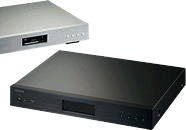
Melco-Audio
N50-H60-
Melco-Audio
N50-S38

Dela
N5
-
Dela
N1